Free Doesn’t Sell the Product
This week, I was reminded of something that shows up in many organizations.
There is a belief that if you simply offer something free — a meeting, an event, a workshop, or a gift — people will experience it and decide to join.
In other words:
“If they just come to the meeting, it will sell itself.”
But in my experience, that rarely happens.
Free experiences are powerful. They lower risk and allow people to try something without commitment.
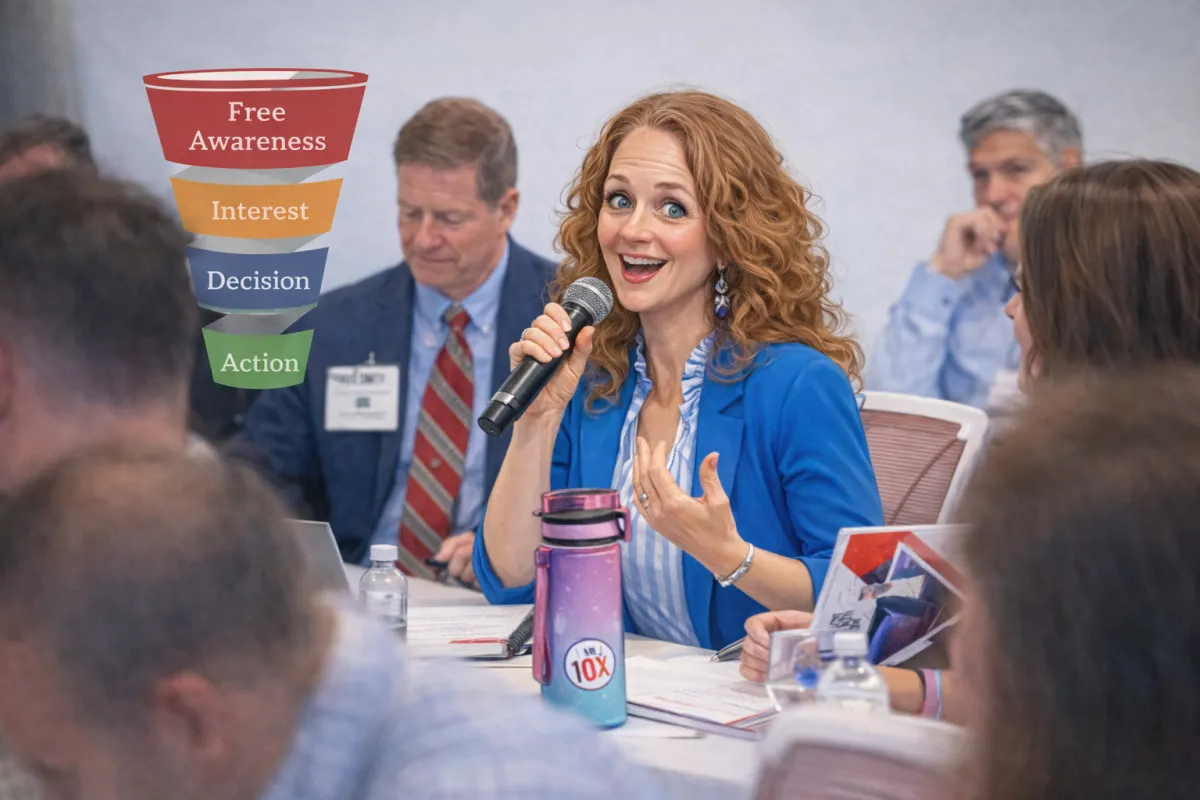
But free is only at the top of the funnel.
In fact, 'Free' is actually second to the conversation step (understanding where the person needs support is the first step).
The Funnel Doesn’t End at the Free Step
Russell Brunson explains this clearly when he talks about sales funnels.
The first step is simply traffic — getting attention.
This might include:
networking
speaking engagements
social media
events
workshops
free meetings
These activities create awareness.
But awareness alone doesn’t create commitment.
The next steps in the funnel are:
capturing the leads' contact
nurturing relationships
having conversations
helping someone understand how your service actually helps them
Only after those steps does someone make a decision.
When organizations skip the nurturing and conversation stages, something predictable happens.
People attend the free event.
They enjoy it.
And then they leave.
A Lesson From Toastmasters
Years ago, I saw this pattern clearly in Toastmasters.
Visitors would come to a meeting and experience the environment.
They would enjoy the speeches and encouragement. They might even say they had a great time.
But if nobody spoke with them afterward — if nobody asked questions about what they were hoping to improve — most of them never returned.
The meeting didn’t sell itself.
A person had to connect the dots.
Someone had to ask:
“What are you hoping to get better at?” “What brought you here today?” “Let me show you how this program could help you.”
Without that conversation, the visitor often walked away thinking:
“That was a nice meeting.”
And the sales journey ended there.
A Conversation With Don, Toastmaster Veteran
This week, I had a conversation with a client that reinforced the same idea.
Donald Zurakowski pointed out something simple but powerful.
BEFORE you ever invite someone to "another meeting", you first sell yourself by...
You ask questions.
You learn about their situation.
You understand where they might need support.
Only after that do you suggest something that might help them.
In other words, you don’t prescribe the medicine before understanding the problem.
Many organizations do the opposite.
They lead with the invitation.
“Come to the meeting.” “Try the free event.” “Take the free sample.”
But the person receiving the invitation may not yet understand why it matters to them.
So even if they attend, they may never connect the experience to their own needs.
The Role of the Professional Salesperson
This is why sales skill matters so much.
Sales is not pressure.
Sales is helping someone understand how a solution relates to their situation.
It starts with curiosity.
Questions.
Listening.
Understanding what someone actually wants to improve.
Only then can you show how a product, service, or community might help them.
When that connection is clear, people don’t feel sold.
They feel helped.
Inside the Room Truth
Free experiences attract attention.
But conversations create commitment.
The organizations that grow consistently understand that the free step is only the beginning.
The real work happens afterward — when someone takes the time to ask questions, understand the person in front of them, and help them see how the solution might serve them.
Free experiences attract attention.
But it’s thoughtful conversations that turn attention into commitment.
Penny Nilsen, 10X Business Coach, Facilitation & Communication Specialist, First Choice Facilitation Inc.
PS If you feel like a community of supportive business owners and business education would benefit you, join us at our next Think Bigger Fridays event on Friday, March 13, with guest speaker Silvia Pencak


