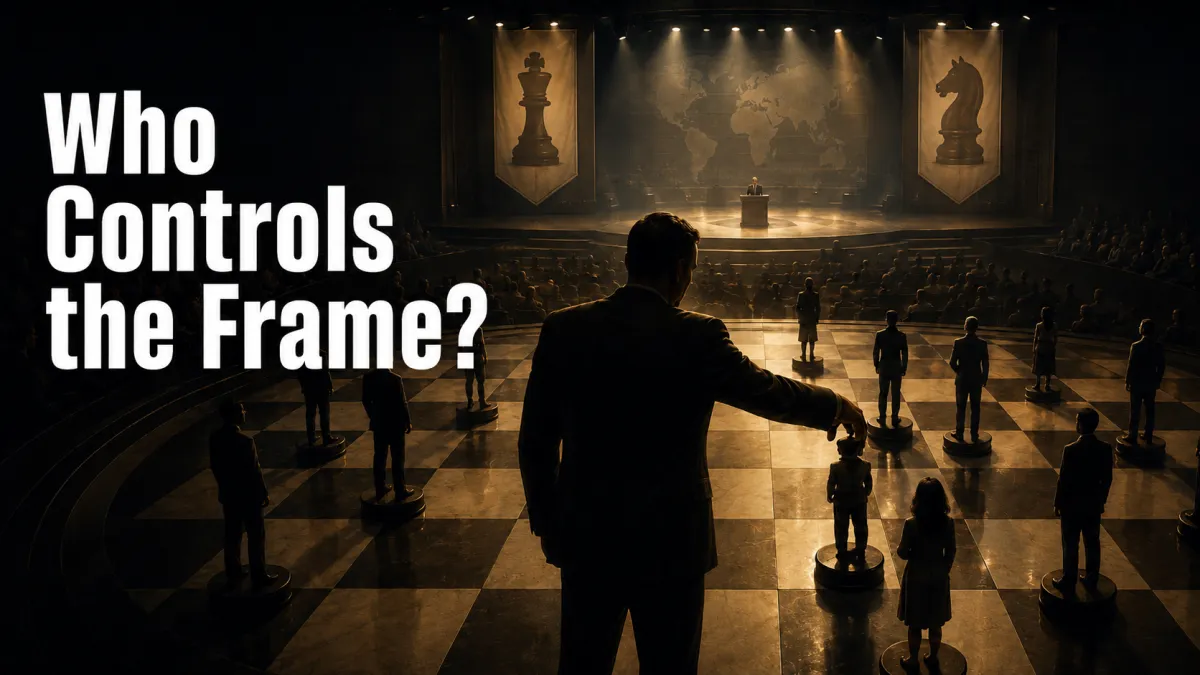
The Room was the Lesson
This week, I attended a business growth event that gave me more than information.
It gave me a front-row seat to something every speaker, facilitator, coach, and business owner should understand:
The room is never neutral.
Before the content even begins, the room is already being shaped.
Where people sit.
Who gets called forward.
Who gets praised.
Who gets challenged.
Who becomes the example.
Who becomes the testimonial.
Who becomes the contrast.
A skilled speaker does not just deliver information.
A skilled speaker builds a world.
And once the world is built, everyone in the room starts playing a role.
Some people become proof.
Some become possibility.
Some become contrast.
Some become cautionary tales.
Some become social proof.
Some become the transformation story the audience needs to see.
That was my biggest learning.
Not just what was said from the stage — but how the room was arranged to make the message feel true.
There was the long-time follower, called forward as evidence of loyalty and long-term impact.
There were people brought on stage and used as live examples of mindset, identity, fear, or credibility.
There were symbols — pins, credentials, photos, famous names, stages, and status markers — all used to make a point about what creates authority.
There was the audience, watching and reacting, becoming part of the proof.
And at the centre of it all was the speaker, interpreting what everything meant.
That is powerful stagecraft.
It is also a reminder that leadership comes with responsibility.
Because when you hold the microphone, you hold the frame.
You decide what gets amplified.
You decide what gets minimized.
You decide whether someone feels elevated, exposed, challenged, or used.
You decide whether the room becomes a place of growth or a place of performance.
As someone who teaches communication, facilitation, and business growth, I could not stop noticing the mechanics.
The speaker was not just teaching branding.
He was demonstrating branding.
He showed how credibility can be built through proximity, association, visibility, status, and story. Stand on the right stage. Take the right photo. Be seen with the right people. Enter the right rooms. Wear the right symbol in the right context.
And there is truth in that.
People do make decisions based on what they see. People do trust faster when credibility signals are present. People do respond to confidence, visibility, and social proof.
But here is the part I keep coming back to:
Borrowed credibility can get attention. Earned credibility keeps trust.
A photo may open curiosity.
A stage may create visibility.
A title may create interest.
A certificate may start a conversation.
A famous connection may turn heads.
But none of those things can replace substance.
Can you serve?
Can you listen?
Can you deliver?
Can you solve the real problem?
Can you help people feel seen without making them feel small?
Can you build trust after the spotlight is gone?
That is where real credibility is built.
The experience reminded me that every room has a code.
Some rooms are built around hierarchy.
Some rooms are built around performance.
Some rooms are built around belonging.
Some rooms are built around learning.
Some rooms are built around selling.
Some rooms are built around transformation.
And often, they are built around several of those things at once.
That is why discernment matters.
When you enter a powerful room, ask yourself:
What role am I being invited to play here?
Am I being seen?
Am I being served?
Am I being challenged?
Am I being sold?
Am I being positioned?
Am I being used as proof for someone else’s message?
Sometimes the answer may be: all of the above.
That does not mean the room is bad.
It means you need to stay awake.
The best rooms expand your authority.
The most dangerous rooms absorb your authority into someone else’s.
That distinction matters.
As business owners, speakers, coaches, and leaders, we all need visibility. We need rooms. We need relationships. We need opportunities. We need stages.
But the goal is not to be chosen by someone else’s stage forever.
The goal is to build enough clarity, competence, and credibility that we can stand anywhere and still know who we are.
So yes, get in the room.
Learn from powerful people.
Study how the room is built.
Notice how influence works.
Watch how stories are shaped.
Pay attention to what creates trust.
Pay attention to what creates pressure.
But do not confuse attention with authority.
The stage gives you visibility.
Your substance gives you credibility.
And your results give people a reason to trust you after the room goes quiet.
That was my real takeaway.
Not just how to be seen.
But how to stay grounded while being seen.
Because the room may be someone else’s stage — but your authority still belongs to you.
Until next week - be great because nothing else pays!
Penny
It gave me a front-row seat to something every speaker, facilitator, coach, and business owner should understand:
The room is never neutral.
Before the content even begins, the room is already being shaped.
Where people sit.
Who gets called forward.
Who gets praised.
Who gets challenged.
Who becomes the example.
Who becomes the testimonial.
Who becomes the contrast.
A skilled speaker does not just deliver information.
A skilled speaker builds a world.
And once the world is built, everyone in the room starts playing a role.
Some people become proof.
Some become possibility.
Some become contrast.
Some become cautionary tales.
Some become social proof.
Some become the transformation story the audience needs to see.
That was my biggest learning.
Not just what was said from the stage — but how the room was arranged to make the message feel true.
There was the long-time follower, called forward as evidence of loyalty and long-term impact.
There were people brought on stage and used as live examples of mindset, identity, fear, or credibility.
There were symbols — pins, credentials, photos, famous names, stages, and status markers — all used to make a point about what creates authority.
There was the audience, watching and reacting, becoming part of the proof.
And at the centre of it all was the speaker, interpreting what everything meant.
That is powerful stagecraft.
It is also a reminder that leadership comes with responsibility.
Because when you hold the microphone, you hold the frame.
You decide what gets amplified.
You decide what gets minimized.
You decide whether someone feels elevated, exposed, challenged, or used.
You decide whether the room becomes a place of growth or a place of performance.
As someone who teaches communication, facilitation, and business growth, I could not stop noticing the mechanics.
The speaker was not just teaching branding.
He was demonstrating branding.
He showed how credibility can be built through proximity, association, visibility, status, and story. Stand on the right stage. Take the right photo. Be seen with the right people. Enter the right rooms. Wear the right symbol in the right context.
And there is truth in that.
People do make decisions based on what they see. People do trust faster when credibility signals are present. People do respond to confidence, visibility, and social proof.
But here is the part I keep coming back to:
Borrowed credibility can get attention. Earned credibility keeps trust.
A photo may open curiosity.
A stage may create visibility.
A title may create interest.
A certificate may start a conversation.
A famous connection may turn heads.
But none of those things can replace substance.
Can you serve?
Can you listen?
Can you deliver?
Can you solve the real problem?
Can you help people feel seen without making them feel small?
Can you build trust after the spotlight is gone?
That is where real credibility is built.
The experience reminded me that every room has a code.
Some rooms are built around hierarchy.
Some rooms are built around performance.
Some rooms are built around belonging.
Some rooms are built around learning.
Some rooms are built around selling.
Some rooms are built around transformation.
And often, they are built around several of those things at once.
That is why discernment matters.
When you enter a powerful room, ask yourself:
What role am I being invited to play here?
Am I being seen?
Am I being served?
Am I being challenged?
Am I being sold?
Am I being positioned?
Am I being used as proof for someone else’s message?
Sometimes the answer may be: all of the above.
That does not mean the room is bad.
It means you need to stay awake.
The best rooms expand your authority.
The most dangerous rooms absorb your authority into someone else’s.
That distinction matters.
As business owners, speakers, coaches, and leaders, we all need visibility. We need rooms. We need relationships. We need opportunities. We need stages.
But the goal is not to be chosen by someone else’s stage forever.
The goal is to build enough clarity, competence, and credibility that we can stand anywhere and still know who we are.
So yes, get in the room.
Learn from powerful people.
Study how the room is built.
Notice how influence works.
Watch how stories are shaped.
Pay attention to what creates trust.
Pay attention to what creates pressure.
But do not confuse attention with authority.
The stage gives you visibility.
Your substance gives you credibility.
And your results give people a reason to trust you after the room goes quiet.
That was my real takeaway.
Not just how to be seen.
But how to stay grounded while being seen.
Because the room may be someone else’s stage — but your authority still belongs to you.
Until next week - be great because nothing else pays!
Penny


