“Uncommitted” Is the Most Expensive Story Leaders Tell Themselves
When someone leaves a group, a program, a workplace, or a customer relationship, leaders often reach for the fastest explanation:
They weren’t committed. They didn’t work the program. They weren’t pulling their weight.
Sometimes that’s true.
But it’s also the most convenient story we can tell because it keeps the system from being examined.
A better leadership question is:
What made commitment difficult to form here?
People can be responsible for their choices. Leaders can still be responsible for the conditions in which those choices were made.
Here are three lessons I keep coming back to.
1) A strong program does not automatically create belonging
A group can have a proven structure. A business can have a solid process. A workplace can have clear expectations.
But people rarely stay because the system looks impressive on paper.
They stay when they feel: seen, respected, connected, and like there is a real place for them in the room.
In community-building spaces, I’ve watched a consistent pattern: if a new person isn’t noticed, doesn’t make even one meaningful connection, or repeatedly feels foolish and exposed, they often leave regardless of how good the programming is.
Leaders may assume, “They just weren’t serious.”
Another possibility: they never felt rooted enough to stay.
Leadership question: Are we onboarding people into the system, or helping them become part of the community?
2) What gets measured can quietly become what matters most
Many organizations say they are relationship-based, people-first, or community-driven.
Yet the energy of the room often revolves around: scores, stats, tracking, rankings, compliance, and who is keeping up.
Metrics matter. Accountability matters.
But when the measurable becomes more visible than the meaningful, people can start to feel judged by the scoreboard instead of supported by the group.
Some personalities are especially sensitive to being publicly behind, wrong, or incompetent. If their repeated experience is, “Every time I show up, I’m reminded I’m near the bottom,” they don’t feel motivated. They feel exposed.
When the scoreboard is public and the support is private, people don’t get better. They get quieter.
And once someone feels small in a room, their focus shifts from: “How can I contribute here?”
to: “How do I get away from this feeling?”
Leadership question: Do our measurements strengthen commitment, or are they eroding dignity for the very people we hoped to retain?
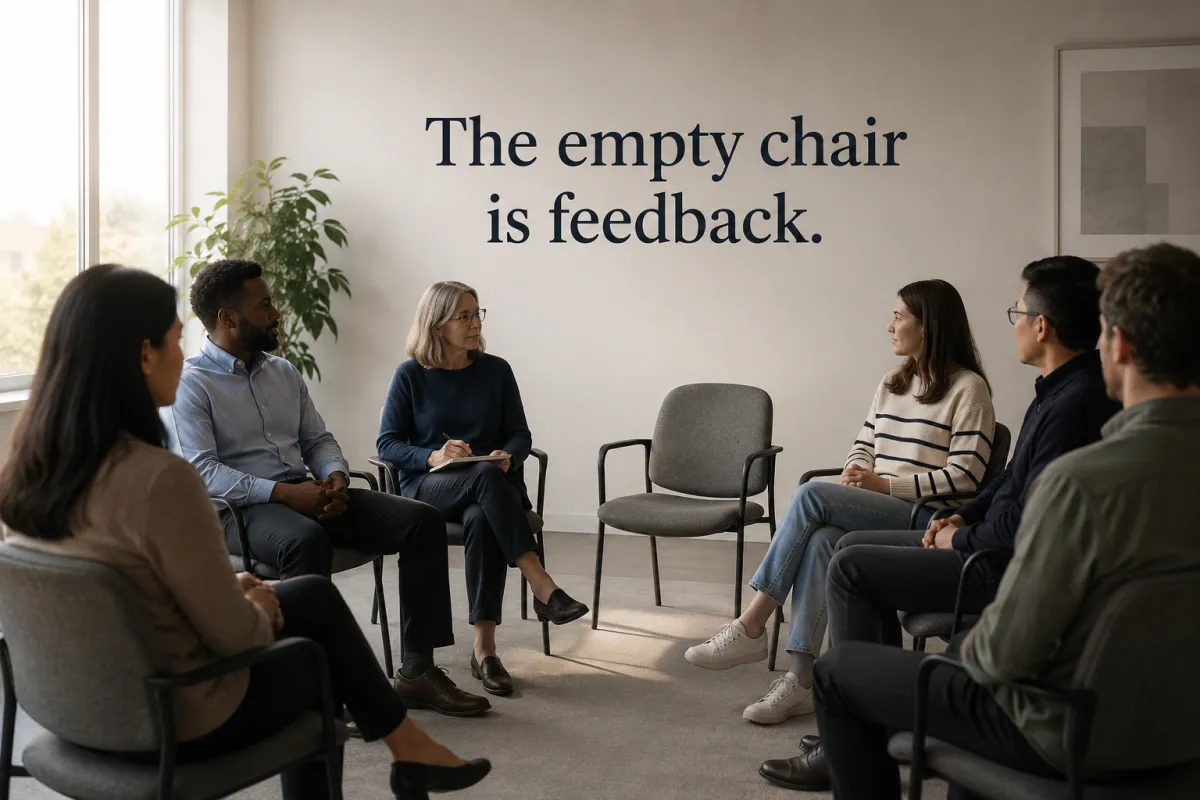
3) When people leave, leaders need curiosity more than judgment
If a customer stops buying, a thoughtful business asks why. If an employee resigns, a thoughtful employer wants to understand what contributed.
If a member quietly leaves a group, leaders should be just as curious.
Not defensive. Not dismissive. Curious.
A short exit conversation or survey can reveal what leaders can’t see from the front of the room:
Did they feel welcomed? Did they build even one real relationship? Did they understand how to succeed? Did the culture feel supportive or performative? Did the system create clarity, or quiet shame? What did they hope the experience would become that it never became?
Without feedback, leaders default to a story that sounds strong but is dangerous:
The program works. The person failed.
A system that refuses to learn from those who leave may protect its pride, while quietly weakening its future.
Leadership question: When someone doesn’t commit, do we label them, or do we ask what made commitment difficult?
The lesson I don’t want to miss
People do have responsibility. They need to participate, communicate, follow through, and give a process a fair chance.
Leadership has responsibility too.
Leaders shape the culture people experience. Leaders decide whether the room feels human or mechanical, supportive or judgmental, relational or transactional. Leaders decide whether departures become gossip or data.
Not everyone who leaves was the wrong person.
Sometimes they were giving us information.
Wise leaders stay humble enough to listen.
A simple retention practice (15 minutes this week)
Belonging check: Did every new person make one real connection? If not, who owns that?
Dignity check: Are metrics being used to coach, or to rank?
Clarity check: Could a newcomer explain how to succeed here in one sentence?
Exit check: When someone leaves, do we capture the reason within 72 hours?
Repair check: What one change would reduce unnecessary friction for the next person?
Reflection for leaders
Before deciding someone “just wasn’t committed,” ask:
What was our part in the fact that commitment never formed?
Until next week, be great because nothing else pays.
Penny


