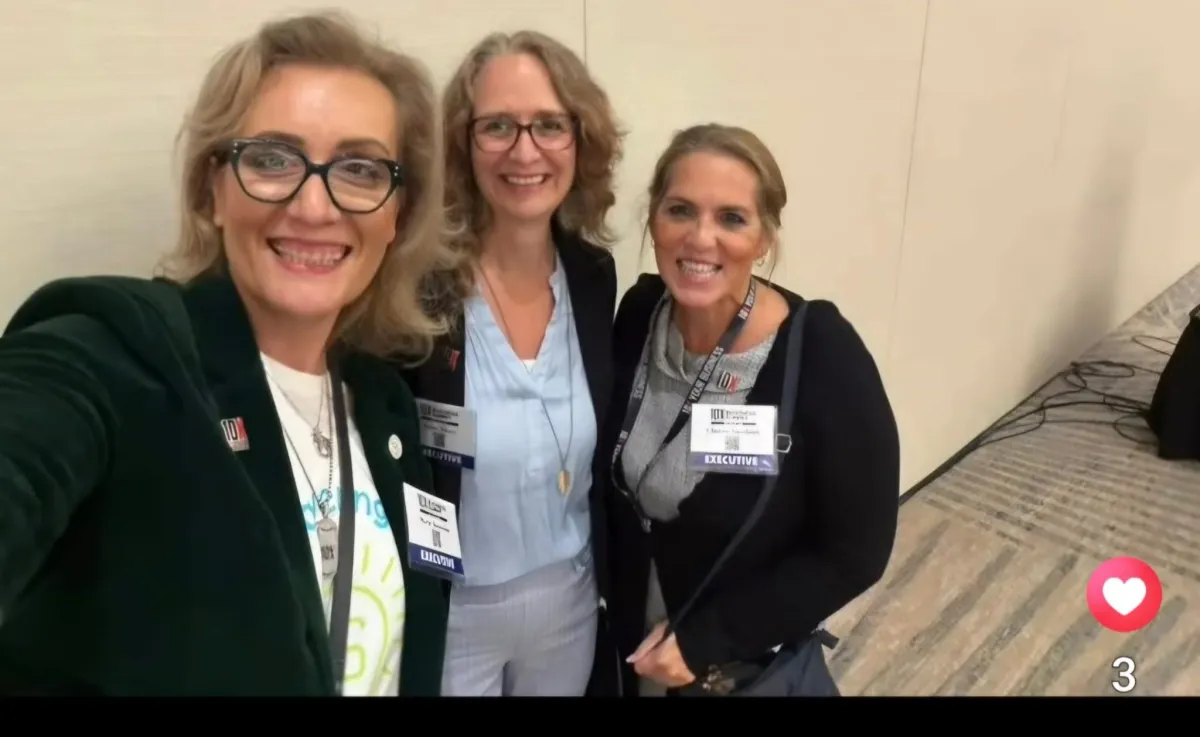
Miami 10X Business Summit — Part 1: Why Good Companies Stay Small
This week I'm in Miami for the three-day 10X Business Summit. I expected to walk out of Day One with new marketing angles, sales ideas, and a few tech tools to try.
I did.
But the real lesson was more basic than that: a lot of companies stay small because the business outgrew the systems holding it up.
A business can be profitable, respected, genuinely busy — and still unable to grow without piling more stress onto the owner and the team. That's not always a demand problem. Sometimes it's just that the business has hit the ceiling of what its current way of operating can support.
What Worked at the Start Can Start Working Against You
Most businesses begin with a highly involved owner — answering the phone, writing the quotes, chasing follow-up, solving every employee problem, making nearly every call. Early on, that's not a flaw. It's often the only reason the business gets moving at all: the owner's knowledge, relationships, and sheer will are the engine.
The trouble is, those same strengths quietly become a dependency as the company grows. More customers means more communication. More employees means more decisions. More revenue means more moving parts, all needing to be coordinated at once.
Eventually the owner becomes the place where everything meets. From the outside, the business looks like it's working. Inside, the owner is carrying most of it personally.
That's not a leadership failure. It's usually just a sign the business has outgrown how it was originally built.
A Goal Isn't a Target
One of the big ideas from Day One: companies need actual targets, not general intentions like "we want to grow" or "we need more customers." Those are wishes.
They don't give the business anywhere specific to go.
A real target is measurable — how much revenue you're working toward, how many qualified leads you need, what conversion rate you're actually running at, how many people you'll need to support the next stage. Clear numbers remove the guesswork. They let the owner communicate the vision and make accountability something more objective than a feeling.
Without targets, people stay busy. With targets, people can actually tell whether the busy is working.
A Target Without Tracking Is Just a Hope
Setting a goal isn't the same as managing one. A business needs a way to see what's happening while there's still time to do something about it — which means tracking the handful of numbers that actually show whether things are moving or drifting.
Revenue matters, but revenue is the last number in the chain. Before the sale ever happens, there's marketing activity, leads, response time, appointments booked, show rates, follow-up, conversion. When none of that is visible, the owner ends up managing on instinct — which is fine, until it's the only information they have.
A simple dashboard turns a vague worry into a specific question. Instead of "sales are slow," you can actually ask whether you're generating enough leads, reaching them fast enough, and following up after that first conversation. That's a far more useful conversation to have.
Build. Optimize. Scale.
One visual from the summit stuck with me: build the system, optimize the system, then scale the system. Most businesses try to run that backwards — more advertising before there's a dependable way to manage the leads it creates, more hires before anyone's documented how the work actually gets done, new software bought before anyone decided what process it's supposed to support.
More volume just means more confusion at that point. Scaling doesn't fix a weak system — it multiplies whatever's already there. A strong process gets more productive. A broken one gets more expensive.
The real question isn't "how do we get bigger." It's "what needs to become repeatable before we do?"
Systems Aren't About Removing People
"System" can sound mechanical, and some owners worry it'll make the company rigid or impersonal. I see it the other way. A good system doesn't replace judgment — it clears out the preventable confusion so people can use their judgment where it actually matters.
A documented intake process means important details don't get missed. A CRM means the team remembers conversations and follow-up dates instead of relying on memory. Good onboarding means a new hire knows what success looks like from day one instead of guessing.
Systems don't make people less important. They just give people a clearer environment to be good at their job in.
I Had to Look at My Own Business, Too
Day One included an exercise: rate your own systems — targets, marketing, lead generation, sales, follow-up, onboarding, development, AI integration. My score was humbling, and honestly, that was the useful part. It's easy to spot the gaps in someone else's business. It takes more honesty to look at your own.
I could see exactly where I've been running on effort, knowledge, and personal follow-through instead of building something more repeatable.
The answer isn't to fix all of it at once. The note I wrote myself was simpler: change one thing at a time. Find the biggest bottleneck, define what "fixed" looks like, document the process, track what happens, improve it — then move to the next one.
Why This Actually Matters
This isn't only about efficiency — it affects what the business is actually worth. A company that depends heavily on the owner is hard to transfer, hard to sell, and hard to run when that owner isn't in the room. A company with real processes, reliable information, and a capable team has options: the owner can step away, the team can make more calls on their own, new hires ramp up faster, growth gets less chaotic, and succession stops being theoretical.
That's the thread I kept pulling on all through Day One. Getting the business out of the owner's head and into repeatable systems isn't paperwork for its own sake. It's how the owner buys back freedom, protects what the company knows, and builds something that can actually outlast them — or eventually be sold.
My Day One Takeaway
The biggest lesson wasn't that business owners need to work harder — most of the owners I meet are already working plenty hard. It's that a business can't sustainably outgrow the systems holding it up.
So before asking how to double the business, it's worth asking: What currently depends entirely on me? Which numbers am I not tracking? Where are leads or customers quietly falling through the cracks? What would break first if demand doubled tomorrow?
The answers point to where the next stage of growth actually needs to start. Not more pressure — more clarity. Not more activity — stronger systems. And not fixing everything at once — just finding the next most important thing and building from there.
Coming in Part 2: why being excellent isn't enough, and what Day One taught me about attention, marketing, and actually becoming known.
In the meantime: what part of your business would struggle first if your customer volume doubled next month?
Penny
PS: For more newsletters, check out my blog. We also offer two complimentary visits to our weekly Think Bigger Friday online mastermind for small business owners ready to grow and who want to be around like-minded people.


